
Tethered vs Untethered EV Chargers: Which Is Right for You? | Woking Electrician’s Guide
Choosing a home EV charger should be straightforward — you just need a box on the wall that puts electricity into your car. But within five minutes of researching online, you’re buried in specifications, brand comparisons, and terminology that makes a simple purchase feel unnecessarily complicated. Tethered or untethered. Smart or non-smart. 7kW or 22kW. Zappi, Easee, Ohme, Pod Point, Wallbox — each with different features, different price points, and different claims about why they’re the best option.
This guide cuts through the noise and explains the genuine differences that matter when choosing a home EV charger for your Woking property, helping you make a decision based on practical considerations rather than marketing.
Tethered vs Untethered: The Fundamental Choice
The first decision is whether you want a tethered or untethered charger, and this is the one that affects your daily experience most directly.
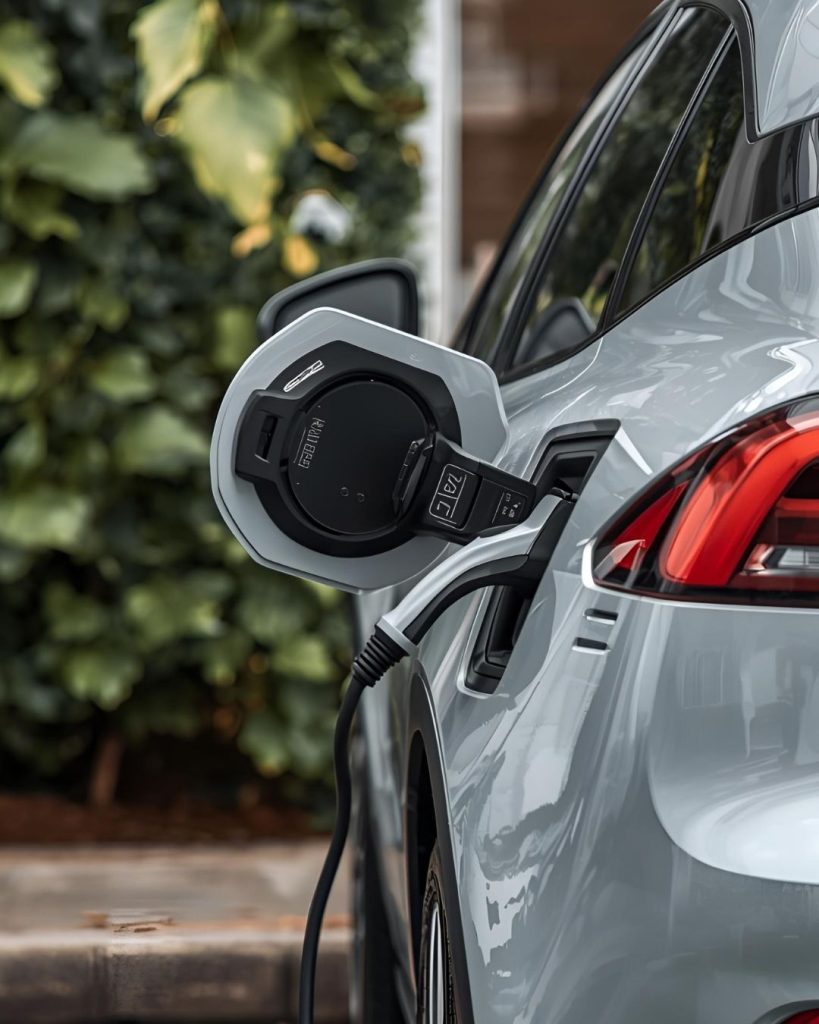
A tethered charger has a cable permanently attached to the unit. You pull the cable out, plug it into your car, and start charging. When you’re done, you coil the cable back and hang it on the integrated holder. The cable is always there, always ready, and always the right connector for your vehicle because you specified it when the charger was installed.
An untethered charger has a socket on the front instead of a permanently attached cable. You use your own cable — the one that came with your vehicle or a separately purchased one — plugging one end into the charger socket and the other into the car. When charging is complete, you unplug both ends and store the cable yourself, usually in the boot of the car.
The practical difference comes down to convenience versus flexibility.
Tethered is more convenient for daily use. You walk to the charger, grab the cable, plug in, and walk away. There’s no fetching a cable from the boot, no untangling, and no plugging in two ends instead of one. On a cold, wet Tuesday evening in Woking when you just want to get inside, the tethered charger wins every time. The cable is always the right length, always attached, and always ready.
Untethered is more flexible. If your household has two electric vehicles with different connector types, an untethered charger works with both because each car uses its own cable. If you’re likely to change vehicles in the future and aren’t sure whether the next one will use the same connector, untethered avoids being locked into a specific plug type. And some homeowners simply prefer the tidier appearance of a charger without a cable hanging on the wall when it’s not in use.
For most single-vehicle households across Woking, tethered is the better choice because the daily convenience outweighs the flexibility you’re unlikely to need. For households with two EVs or those who value a cleaner wall-mounted appearance, untethered makes more sense.
Smart vs Non-Smart Chargers
Almost every home charger sold in the UK today is a smart charger, and since June 2022 all new installations are legally required to have smart functionality. But the term “smart” covers a wide range of capabilities, and understanding what you’re actually getting helps you choose between brands.
At a minimum, a smart charger connects to your home WiFi and communicates with an app on your phone. This allows you to schedule charging sessions to start and stop at specific times — critical for taking advantage of off-peak electricity tariffs that can halve your charging cost. Most energy suppliers now offer EV-specific tariffs with significantly cheaper overnight rates, typically between midnight and 5am. A smart charger set to charge only during these hours saves hundreds of pounds per year compared to charging at peak rates.
Beyond basic scheduling, different brands offer different smart features. Some monitor your energy consumption and adjust charging to avoid overloading your supply. Some integrate with solar panels to prioritise free solar energy over grid electricity. Some track your charging costs over time and show you exactly what each session cost. Some allow you to set charging limits so the battery stops at 80% — which many EV manufacturers recommend for daily use to preserve battery health.
The smart features that genuinely matter for most Woking homeowners are scheduled charging for off-peak tariffs, load management to prevent overloading, and energy monitoring to track costs. Everything beyond that is useful but not essential.
The Main Charger Brands Compared
Five brands dominate the UK home charger market, and each has a distinct character.
Easee is the most compact charger available — roughly the size of a small lunchbox. Despite its size, it’s a fully featured smart charger with app control, scheduled charging, load management, and energy monitoring. The design is clean and minimal, which appeals to homeowners who want the charger to be as unobtrusive as possible on their wall. It’s expandable — if you add a second charger later for another vehicle, the two units communicate and share the available supply automatically. Easee chargers are untethered, so you use your own cable. Price for the unit is typically £500 to £700 before installation.
Zappi is made by Myenergi and is the go-to choice for homes with solar panels. Its standout feature is the ability to divert surplus solar generation into your car rather than exporting it to the grid. In eco mode, the Zappi only charges when solar generation exceeds household consumption, giving you essentially free miles. In eco+ mode, it blends solar and grid power to charge faster while still prioritising your own generation. Even without solar panels, the Zappi is a solid, well-built charger with full smart functionality. Available in both tethered and untethered versions. Price is typically £600 to £800 before installation.
Ohme takes a different approach to smart charging. Rather than simply scheduling start and stop times, the Ohme communicates directly with your energy supplier’s tariff data and automatically charges your car during the cheapest half-hour slots throughout the night. If your tariff has variable pricing — like Octopus Agile where the rate changes every 30 minutes — the Ohme optimises charging to hit the cheapest windows automatically without you needing to set specific times. It’s the most intelligent option for homeowners on dynamic tariffs. Available tethered and untethered. Price is typically £400 to £600 before installation, making it one of the more affordable options.
Pod Point was one of the earliest UK home charger brands and remains popular through its partnership with Tesco and widespread public network presence. The home charger — the Pod Point Solo — is a straightforward, reliable unit with app control, scheduling, and energy monitoring. It’s a solid mid-range option without the specialist features of the Zappi’s solar integration or the Ohme’s tariff optimisation. Available tethered and untethered. Price is typically £450 to £650 before installation.
Wallbox is a Spanish brand with a growing UK presence. The Pulsar Plus is their main home charger — compact, well-designed, and fully featured with app control, scheduling, power sharing for multi-charger setups, and energy monitoring. The Wallbox range also includes bi-directional chargers capable of vehicle-to-home power flow, though this technology is still emerging in the UK market. Available tethered and untethered. Price is typically £450 to £700 before installation.
7kW vs 22kW: Does It Matter?
Almost every home EV charger installation across Woking is 7kW, and there’s a straightforward reason — most UK homes have a single-phase electricity supply, and 7kW is the maximum a single-phase supply can deliver to a charger. Installing a 22kW charger on a single-phase supply doesn’t give you 22kW of charging — the charger simply operates at the maximum the supply allows, which is 7kW.
22kW charging requires a three-phase electricity supply, which is uncommon in residential properties across Woking and most of the UK. Some larger detached properties, new builds, and rural homes have three-phase supplies, but the vast majority don’t. If you’re unsure whether your property has single or three-phase, your electrician checks this during the assessment.
For a single-phase property, a 7kW charger delivers roughly 25 to 30 miles of range per hour of charging. For a typical daily commute of 30 to 40 miles, that’s fully replenished in under two hours. For a full charge from empty on a 60kWh battery, it takes eight to ten hours — comfortably overnight. For the vast majority of Woking drivers, 7kW is more than adequate for daily home charging needs.
Cable Length Matters
If you’re choosing a tethered charger, the cable length affects both convenience and cost. Most tethered chargers come with either a 5-metre or 7.5-metre cable as standard, with longer options available at additional cost.
Think about where the charger will be mounted and where your car’s charging port sits when parked. If the charger is on the garage wall and your car parks directly in front of it, a 5-metre cable is usually sufficient. If the charger is on the house wall and your car parks on a driveway several metres away, or if your charging port is on the opposite side of the vehicle from the charger, you may need the longer cable to reach comfortably without stretching.
A cable that’s too short is a daily frustration. A cable that’s slightly longer than needed is a minor inconvenience to coil. When in doubt, go longer.
What About Installation Costs?
The charger unit is only part of the total cost. Installation covers the electrical work needed to connect the charger to your home’s supply — a dedicated circuit from the consumer unit, cable routing, earth rod installation, and testing.
A standard installation in Woking typically adds £300 to £500 to the charger cost, bringing the total for a complete installation to between £650 and £1,300 depending on the charger brand and the complexity of the electrical work. Longer cable runs from the consumer unit to the charger position, consumer unit upgrades where the existing board is full or lacks adequate protection, and supply capacity issues that require load management all influence the installation cost.
The most accurate way to get a price is a site assessment where the electrician checks your consumer unit, measures the cable run, and confirms whether any additional work is needed. Most reputable installers offer this assessment free of charge.
Making the Right Choice
For most Woking homeowners installing their first home charger, the decision comes down to a few practical questions. Do you want the daily convenience of a tethered cable or the flexibility of untethered? Do you have solar panels that would benefit from the Zappi’s generation diversion? Are you on a dynamic energy tariff where the Ohme’s automatic optimisation would save money? Is compact design important enough to choose the Easee? Or do you want a straightforward, reliable charger at a competitive price where Pod Point or Wallbox fit the bill?
There’s no universally best charger — there’s the right charger for your specific situation. If you’re considering a home EV charger at your Woking property, get in touch for a free assessment. We’ll check your electrics, discuss your options honestly, and recommend the charger that genuinely suits your needs rather than the one with the biggest margin.